Why a US Chip Ban Doesn't Cover Renting Nvidia GPUs Abroad
Export rules track physical chips, not remote access. How the cloud loophole works, what Commerce may close this month, and why a fix is hard to enforce.
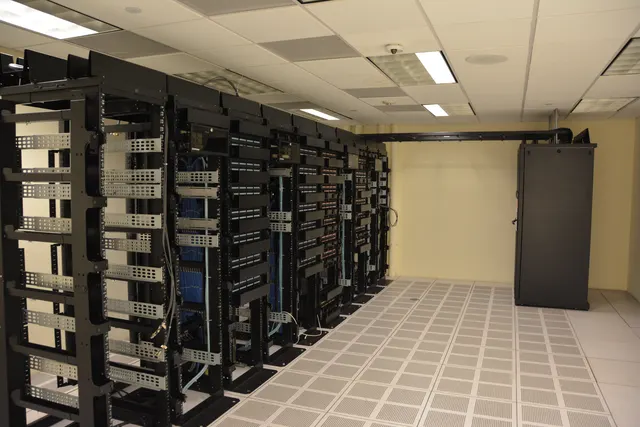

In July, a Chinese AI lab released a new model, and less than a week later a White House official accused it of having been trained on Nvidia’s newest GB300 chips, which the United States does not allow to be sold to China. The chips were reportedly sitting in a facility in Thailand. Nobody had smuggled anything. The lab, according to CNBC, was renting them by the hour. That gap between owning a chip and using one is the loophole Washington is now trying to close.
What export controls actually control
US export rules are written around things that move. The law behind them authorizes controls on the “export, re-export, and in-country transfer” of items, and a law-firm analysis by Freshfields notes that the Export Administration Regulations do not generally reach remote access that involves no export of a controlled item. A chip that stays in a rack in Malaysia is not exported to anyone; a customer who logs in to use it is not importing it.
CNBC quotes an analyst at the Institute for AI Policy and Strategy making the same point: access is legal as long as the Chinese company is not buying and owning the physical hardware, because export controls govern physical chips, not remote access.
How the rental route reportedly works
According to CNBC, ByteDance, Alibaba and Tencent have been reported to use compute in Thailand, Malaysia and Japan. One source said ByteDance worked with a Singapore cloud provider, Aolani, to reach compute in Malaysia. Aolani told CNBC that its customers neither own nor have physical access to the chips and that its service is fully compliant with applicable regulations. The White House accusation against the lab that released the July model concerned a Thailand facility, per the same report.
The business logic is simple. Building AI data centers is the bottleneck of the industry. CNBC cites JLL estimating that global data center capacity could roughly double to 200 gigawatts by 2030, and DC Byte counting 31 planned data centers of 100 megawatts or more in Malaysia, Indonesia and Thailand, versus two today. Much of that new capacity will be rentable by whoever pays.
What Washington has already tried
The Commerce Department’s Bureau of Industry and Security has attacked the problem from the physical side. In May 2025 it rescinded the Biden-era AI Diffusion Rule, issued guidance on diversion tactics and on using US chips to train Chinese models, and added licensing requirements for chip exports to Malaysia and Thailand because of known diversion. Those steps target who buys and ships hardware. They say little about who logs in afterward.
Two ways to close it
Congress has one route. The Remote Access Security Act would extend the Commerce Department’s authority to cover remote access, defined by Freshfields as a foreign person reaching an item over a network from somewhere other than where it physically sits. CNBC reports that it passed the House in January and has not yet passed the Senate; Freshfields says a Senate version could move as an amendment or inside the 2027 defense bill. Even then, the Bureau would still have to write the actual rule.
The other route is regulation. On November 11, The Information reported, citing two unnamed people, that Commerce is preparing a rule barring Chinese AI companies from remotely accessing advanced AI chips in data centers elsewhere, extending controls to seven more countries, of which the report names Malaysia, Singapore and Thailand. The rule is not final, other agencies are being consulted, and it could be announced this month. The same day, public radio’s Here & Now devoted a segment to lawmakers seeking tighter chip export controls. None of this is official until Commerce publishes text.
Why it is hard to enforce
CNBC’s experts describe the practical problems. A rule would have to define which compute is covered, which users are prohibited and how providers must know their customers. The burden would land on cloud companies, which would have to verify who is on the other end of every account. A White House official told CNBC the administration has implemented the most rigorous export control regime in modern history, while the analysts quoted say rental access is still legal today.
Takeaway: US chip controls were built for a world where the thing to stop is a box on a ship. AI compute is now a service, and the rule that governs boxes does not govern logins. Whether Commerce’s reported rule, or a law, changes that depends on details nobody has seen yet: which countries, which chips and how much checking cloud providers must do.