How Deposit Insurance Works When a Bank Fails — and What It Does Not Cover
An explainer on how US and Canadian deposit insurance works: coverage limits, ownership categories, what is excluded, and what happens to depositors when a bank fails.
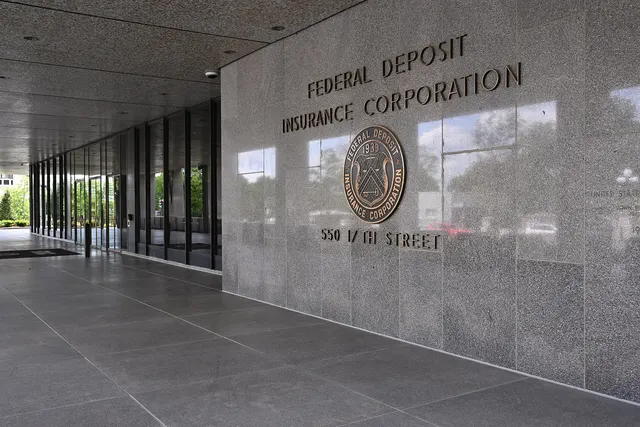

When a bank runs into trouble, the money in an ordinary savings or chequing account is protected by a mechanism most people never think about until the news turns bad: deposit insurance. It is the reason a rumour about a bank no longer has to turn into a line outside the branch. But the protection has limits that are set by rule, not by how large or well known a bank is, and it covers fewer products than many customers assume. Here is how the systems in the United States and Canada work.
The basic promise: a limit per person, per category, per bank
In the United States, deposit insurance is provided by the Federal Deposit Insurance Corporation (FDIC). According to the FDIC’s guide to deposit insurance, deposits are insured “to at least $250,000 per depositor, per ownership category at each FDIC-insured bank.” Each part of that sentence matters. The limit applies to each depositor, not each account, so several accounts of the same type at one bank are added together. It applies separately at each insured bank, so money held at two different insured banks is insured separately. And it applies per ownership category, which is why the same person can be covered above the headline number by holding money in different legal forms.
The FDIC lists the categories as single accounts, joint accounts, certain retirement accounts such as IRAs, trust accounts, employee benefit plan accounts, corporation, partnership and unincorporated association accounts, and government accounts.
Canada works on the same principle with a different number. The Canada Deposit Insurance Corporation (CDIC) says on its page about what is covered that it insures each eligible deposit category separately, up to $100,000 per category, including principal and interest. Its categories include deposits held in one name, joint deposits, deposits held in trust, and registered plans such as RRSPs, RRIFs, TFSAs, RDSPs, RESPs and FHSAs. Eligible deposit types include Canadian or foreign currency deposits, guaranteed investment certificates and other term deposits.
What deposit insurance does not cover
Insurance covers deposits, not investments. The FDIC states that stocks, bonds, mutual funds, annuities, life insurance policies, safe deposit boxes and their contents, US Treasury bills, bonds and notes, municipal securities and crypto assets are not covered. It adds that this applies to non-deposit investment products even when they are sold by an FDIC-insured bank. Buying a fund through the bank’s branch does not turn the fund into a deposit.
CDIC draws the same line. It lists mutual funds, stocks and bonds, exchange-traded funds and cryptocurrencies, including stablecoins, as not covered. The practical point is the one explained in our piece on what happens when a stablecoin depegs: a digital asset that is meant to hold a steady value is not the same legal thing as a bank deposit, and no deposit insurer stands behind it.
Who pays for the insurance
The money does not come from taxpayers in the ordinary course of business. The FDIC says its Deposit Insurance Fund has two sources: assessments, which are insurance premiums paid by FDIC-insured institutions, and interest earned on funds invested in US government obligations. The fund is backed by the “full faith and credit of the United States government.” The FDIC also states that no depositor has lost any FDIC-insured funds since the agency was founded in 1933. CDIC makes a comparable statement on its own page about failures: no one has lost a single dollar under its protection.
What actually happens when a bank fails
A bank failure, in the FDIC’s wording, is the closing of a bank by a federal or state banking regulator, usually because the bank cannot meet its obligations to depositors and others. In its FAQ for depositors, creditors and borrowers, the FDIC says it has provided “prompt access to their insured deposits” when insured banks have failed, and that notice is mailed “immediately after the bank closes.” The FDIC pays insured depositors directly as the insurer, with coverage including accrued interest through the closing date.
Often the depositors never need to be paid out at all, because the failed bank is sold. If another bank acquires it, the assuming bank notifies customers, and that notice, according to the FDIC, “usually is mailed with the first bank statement after the assumption.” The FDIC’s wider approach to failing banks, described on its resolutions page, is to encourage troubled institutions to fix problems on their own, then try to sell the institution to a qualified healthy bank, and in every case to use the least costly option to protect the insurance fund.
CDIC describes a similar menu of outcomes on its page about what happens in a failure. It does not only close a bank and reimburse insured deposits; it can also support a sale of shares or assets, a merger with another institution, a recapitalization, or a restructuring. It chooses an approach by weighing the bank’s size, complexity and value and what private-sector options exist.
What happens to money above the limit
Deposits above the limit are not simply wiped out, but they are not guaranteed either. As receiver of a failed bank, the FDIC sells and collects the bank’s assets and settles its debts, including claims for deposits above the insured limit. Whether and how much uninsured depositors recover depends on what those assets bring in, which is why large balances are usually spread across banks or ownership categories.
Takeaway: Deposit insurance is a rule-based guarantee, capped per depositor, per bank and per category: $250,000 in the US and $100,000 per category in Canada. It protects deposits, not investments or crypto, and its main job is to make a failure boring for ordinary account holders. Anyone holding more than the limit, or money in products that merely sit inside a bank, should check which side of that line it falls on.