How International Disaster Relief Money Actually Reaches the Ground
An explainer on the pooled funds, coordination bodies, and implementing agencies that move humanitarian aid from donor pledges to affected communities.
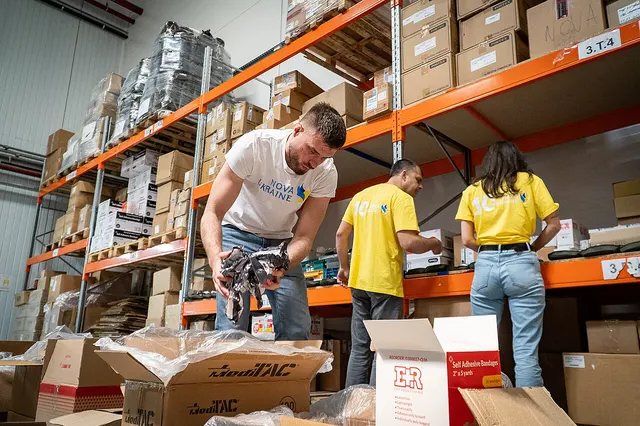

When a major disaster strikes, news coverage often jumps straight from “governments pledge millions in aid” to images of relief supplies being handed out. The steps in between — pooling the money, deciding who spends it, and getting supplies past damaged roads and into the right hands — are where most of the real work, and most of the delay, actually happens.
Step one: pooling and coordinating the money
Disaster response funding rarely moves as a single check from one donor to one recipient. A central piece of the system is the Central Emergency Response Fund (CERF), which the United Nations describes as a pool that “receives voluntary contributions year-round to provide immediate funding for life-saving humanitarian action anywhere in the world.” Because the money is pooled in advance rather than raised fresh after each disaster, CERF can release funds within days of a crisis being declared, well before a full appeal has been fundraised.
Coordination across the dozens of agencies that might respond to any single crisis runs through the UN Office for the Coordination of Humanitarian Affairs (OCHA) and a body called the Inter-Agency Standing Committee, which brings together the “UN system entities most responsible for providing emergency relief” so that food, health, shelter and protection responses are planned together rather than separately duplicating effort.
Step two: agencies with different jobs
Once funds are allocated, they typically flow to specialized agencies whose mandates match the type of need:
- The World Food Programme procures and distributes food and organizes the logistics — trucks, warehouses, sometimes airlifts — for large-scale feeding operations.
- UNICEF focuses on children’s needs, including water, sanitation, nutrition and education in emergencies.
- UNHCR manages assistance for refugees and displaced populations specifically.
- WHO coordinates health-emergency response, and FAO supports agricultural and livelihood recovery so farming communities can get back on their feet.
- The UN Development Programme typically works through UN Resident Coordinators to support the national government’s own response.
This division of labor is deliberate: rather than one generalist agency trying to do everything, each org deploys its own supply chains, technical staff and pre-positioned stock.
Step three: getting past the “last mile”
The hardest part of disaster response is usually the final stretch — getting supplies from a regional warehouse to a flooded village or a bombed-out neighborhood. This is where local and national partners become essential. National governments, domestic Red Cross and Red Crescent societies, and local NGOs typically handle the actual on-the-ground distribution, because they have existing staff, local knowledge and community trust that international agencies flying in from abroad do not. The International Federation of Red Cross and Red Crescent Societies runs its own Disaster Response Emergency Fund specifically to give national Red Cross societies rapid access to funding so that local responders — often the first and fastest on scene — are not stuck waiting for an international appeal to be fully funded before they can act.
A concrete illustration of this layered approach comes from Nepal, where after severe flooding the UN Sustainable Development Group reported that the UN and partner agencies mobilized funding specifically to support a “government-led” response — underscoring that international agencies typically aim to reinforce and channel resources through the national government’s own disaster management structure rather than bypass it.
Why the process can be slow, and where it can also be fast
Two things determine speed. Pre-positioned pooled funds like CERF and national Red Cross emergency funds can move within days because the money and decision-making authority already exist before the disaster happens. By contrast, funding that depends on a fresh public appeal — where donor governments and the public pledge money only after seeing news coverage of a specific disaster — takes longer to convert pledges into cash, and pledges are not always fully honored on the timeline promised. Damaged infrastructure, insecurity, and the sheer logistics of importing and distributing large volumes of aid in a country whose transport networks may themselves be destroyed also slow the final delivery stage regardless of how quickly the money itself was released.
The takeaway
Disaster aid moves through a layered system: pooled emergency funds and coordinating bodies decide how much goes where and fast, specialized UN and Red Cross agencies each handle their own piece of the response, and local governments and community organizations carry out the actual last-mile delivery. Understanding which of these stages a given relief effort is in — pledged, released, or actually distributed — is often the difference between a headline donation figure and aid that has reached anyone at all.
The politics upstream of these operations runs through the same institutions — see what a UN Security Council veto does and does not block — and the logistics downstream depend on open skies, which is what an airspace closure actually means.