Hurricane Names Are Reused Every 6 Years. Unless They're Retired
Atlantic storm names come from six rotating lists of 21, kept by a UN committee. How a name is retired for good, and what happens when the list runs out.
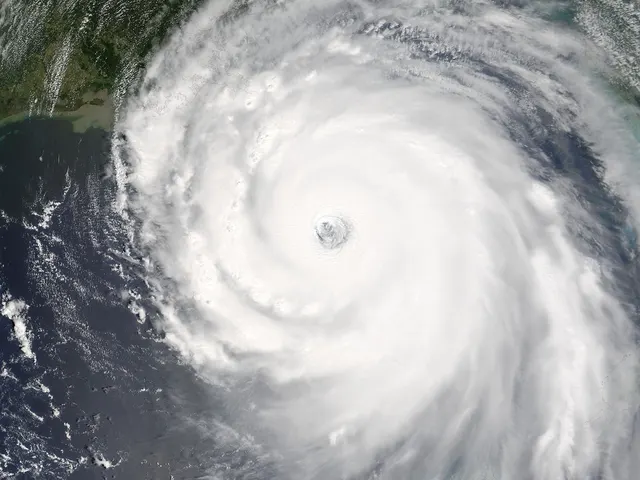
Photo: Jeff Schmaltz, MODIS Rapid Response Team, NASA/GSFC · Public domain · source

The Atlantic hurricane season officially ends on November 30, and the storms of 2026 will soon be filed away under names that were picked years ago. Nobody chooses them on the fly. The first Atlantic storm of 2026 was always going to be called Arthur, the second Bertha, and the 21st Wilfred, because the order was fixed long before the season began.
That fixed order is the whole system. It also has a rule that surprises many people: a name comes back every six years, unless the storm that carried it did too much harm. Here is who keeps the lists, how they work, and how a name gets removed for good.
Who decides the names
The National Hurricane Center (NHC) in Miami forecasts Atlantic storms, but it does not control what they are called. According to the NHC, a strict procedure run by an international committee of the World Meteorological Organization (WMO) governs the lists. The NHC started them: since 1953, Atlantic tropical storms have been named from lists the center originated, and the committee now maintains and updates them.
That committee is the WMO Hurricane Committee. The WMO describes it as experts from national meteorological and hydrological services in North America, Central America and the Caribbean, which together form WMO Regional Association IV. It meets once a year to review the past season and prepare for the next one, and name lists are only a small part of its agenda.
Six lists, 21 names, one rotation
There are six Atlantic lists, one for each year in a six-year cycle. Each list has 21 names, and the NHC says the lists are used in rotation and recycled every six years, so the 2026 list will be used again in 2032. The 2026 list runs from Arthur to Wilfred.
The names alternate between male and female, and the WMO says they are meant to be easy to pronounce in every language in the region. A 21-name list cannot cover the whole alphabet. The Atlantic lists leave out Q, U, X, Y and Z, because, in the committee’s words, names starting with those letters are not common enough or easily understood in local languages.
Storms outside the season follow a simple calendar rule. If a tropical cyclone forms on December 28, it takes the next name from the previous season’s list. If one forms in February, it is named from the following season’s list.
Why storms have names at all
The NHC’s explanation is practical. Short, distinctive names are quicker and less error-prone than the older method of identifying a storm by latitude and longitude, especially when information passes between hundreds of stations, coastal bases and ships. Names also cut confusion when two storms exist at once. The NHC notes that in the past, false rumors started when a radio advisory about one storm was mistaken for a warning about a different storm hundreds of miles away.
From saints to Able, Baker and Charlie
Naming storms is older than the lists. The NHC history page says that for several hundred years, hurricanes in the West Indies were named after the saint’s day on which they struck. Hurricane Santa Ana hit Puerto Rico on July 26, 1825, and two separate storms are both called San Felipe, one in 1876 and one in 1928, because each arrived on September 13.
The modern habit grew from weather maps. The NHC points to the Australian meteorologist Clement Wragge, who began giving women’s names to tropical storms before the end of the 19th century, and to an early use in George R. Stewart’s 1941 novel “Storm.” During World War II the practice became widespread among forecasters, especially Army and Navy meteorologists plotting storms across the Pacific.
In 1953, the United States dropped a two-year-old plan that used a phonetic alphabet (Able, Baker, Charlie) and began using female names for storms. That lasted until 1978, when men’s and women’s names were included in the Eastern North Pacific lists. In 1979, male and female names entered the Atlantic and Gulf of America lists, and the six-year rotation began.
How a name is retired
The only time the lists change is when a storm is so deadly or costly that using its name again for a different storm would be inappropriate. When that happens, the committee strikes the name at its annual meeting and picks a replacement, usually starting with the same letter, as the lists show.
The list of Atlantic retirements on the NHC site begins in 1954 with Carol, Hazel and Edna. Some years have many entries: 2005 retired Dennis, Katrina, Rita, Stan and Wilma. The recent entries include Beryl, Helene and Milton in 2024.
The most recent decision came in March 2026, when the committee met in Mexico City. The WMO announced that Melissa, the Category 5 hurricane that devastated Jamaica and neighboring islands in October 2025, would be retired. The storm was responsible for more than 90 deaths, and the WMO says it is the strongest hurricane on record to make landfall in Jamaica. The committee chose Molly as its replacement, to be used in 2031. Evan Thompson of Jamaica’s meteorological service, who also leads Regional Association IV, said the retirement request was approved unanimously.
Earlier decisions show how the replacements slot in. In 2021 the committee retired Dorian (2019), plus Laura, Eta and Iota (2020), and named the substitutes: Dexter in 2025 for Dorian and Leah in 2026 for Laura. According to that release, Laura made landfall near Cameron, Louisiana, with a storm surge of at least 5 meters (17 feet) above ground level, and caused 47 direct deaths and more than $19 billion in damage. Dorian caused an estimated $3.4 billion in damage in the Bahamas. By that 2021 meeting, 93 Atlantic names had been retired since 1953.
Retirement is a decision about sensitivity, not a rule with a fixed threshold. It is also not entirely new. The NHC notes that before 1979, some names were quietly dropped without a stated reason: in 1966, “Fern” replaced “Frieda,” and no explanation was recorded.
The after-effects of such storms, such as how aid is pooled and spent, are a separate story, covered in our explainer on how disaster relief money reaches the ground.
What happens when the list runs out
Some seasons use all 21 names. The NHC says that when more than 21 named cyclones form in the Atlantic in a season, extra storms take names from an alternate list approved by the WMO.
That list has a recent history. The WMO release says the 21-name list was exhausted in 2005 and again in 2020, and in both years forecasters turned to the Greek alphabet. The 2020 season began with a record nine named storms from May through July, and in November it produced two major hurricanes for the first time on record.
In March 2021 the committee decided the Greek alphabet would not be used again. Its reasons, according to the WMO: attention can fall on the Greek names rather than on a storm’s impacts, some Greek names are confusing when translated into other languages used in the region, and several letters sound alike. In 2020 Zeta, Eta and Theta, which have similar pronunciations, came one after another, and storms with similar-sounding names existed at the same time. Eta and Iota were so severe that they were retired, and the committee noted there was no formal plan for retiring Greek names.
In their place is a supplemental list of names running from A to Z, again excluding Q, U, X, Y and Z on the Atlantic list. Names on it can be retired and replaced like any other.
What to take from it
Three points are worth keeping when a name appears in a headline. The list is fixed in advance, so a name says nothing about the storm’s strength. A name that is later retired is a signal about harm, not about meteorology. And the system is designed to be dull on purpose: a short, pronounceable name that nobody can mistake for another storm.
The 2026 season will be over in a fortnight, but the names themselves will not disappear. Arthur through Wilfred return in 2032, minus any that the committee decides, at some future meeting, should never be used again.