How Lithium-Ion Batteries Are Actually Recycled — and Why They Keep Starting Fires
An explainer on the shredding and smelting or leaching process used to recycle lithium-ion batteries from e-waste, and why the process carries real fire risk.
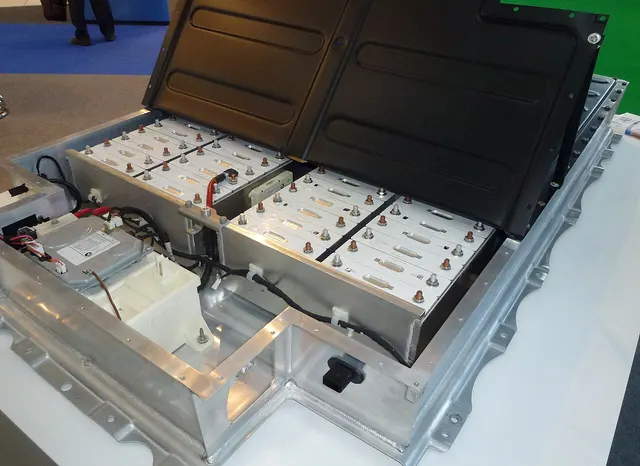
Photo: RudolfSimon · CC BY-SA 3.0 · source

Every laptop, phone, and e-bike battery eventually reaches the end of its life, and where it goes next is more complicated than dropping it in a bin. Lithium-ion batteries are simultaneously a valuable source of recoverable metals and one of the more dangerous items in the waste stream — the same chemistry that makes them useful makes them prone to catching fire if crushed, punctured, or handled the wrong way at exactly the point they’re being recycled.
Why these batteries are treated as hazardous waste
According to the U.S. Environmental Protection Agency, most lithium-ion batteries are likely to be classified as hazardous waste once discarded, “because they may catch fire or explode if not handled carefully.” The risk isn’t theoretical or limited to damaged batteries: the EPA’s own guidance notes that fires at end-of-life are common, and that mismanagement or physical damage to batteries — the kind that happens routinely during collection, sorting, and transport — makes ignition more likely at exactly the stage when it’s hardest to prevent.
From collection to processing
The recycling pathway typically starts with collection points — electronics retailers, dedicated e-waste drop-off centers, or specialized recovery companies — that gather used battery packs before they’re sorted and shipped, sometimes through several intermediate stops, to a processing facility, per the EPA’s overview. Before any battery reaches that stage, some are pulled aside for evaluation rather than destruction: the EPA notes that companies are experimenting with repurposing used electric-vehicle battery packs to store solar-generated electricity, since a battery no longer efficient enough for a vehicle can still hold a useful charge for stationary storage.
Batteries that are processed rather than repurposed are first discharged — deliberately drained of remaining charge — specifically to reduce fire risk before the next, more violent step: shredding. Mechanical shredders break the battery down into separate material streams, including the foils and plastic separators that made up the battery’s casing and internal structure, and a mixed powder known in the industry as “black mass,” which contains the valuable cathode and anode materials — cobalt, nickel, lithium, and manganese compounds, depending on the battery chemistry.
Turning shredded material back into usable metal
Recovering metal from black mass happens through one of two established methods, both described in EPA materials. Pyrometallurgy uses high-temperature smelting to separate and recover metals, similar in concept to traditional metal smelting operations. Hydrometallurgy instead uses a liquid-based chemical leaching process to dissolve out target metals at lower temperatures. Each method has different tradeoffs in cost, energy use, and purity of the recovered material, which is part of why the industry hasn’t settled on a single standard approach.
A newer technique gaining attention, sometimes called cathode-to-cathode recycling, tries to preserve more of the battery’s original chemical structure during processing rather than breaking it down to raw elements — the goal being to reduce the energy and processing demands of manufacturing a brand-new cathode material from scratch.
Where the fire risk actually shows up
The danger isn’t concentrated in one single step — it runs through the entire chain. A damaged cell sitting loose in a bin of mixed electronics can short-circuit and ignite hours or days later, long after it left a consumer’s hands. Compacting equipment used in general waste and recycling facilities not designed to separate out batteries can puncture cells and trigger fires that are difficult to extinguish, since lithium-ion battery fires can reignite even after appearing out. This is a large part of why regulators and recyclers emphasize discharging and dedicated collection streams rather than letting batteries mix into general electronics or municipal waste recycling.
What this means in practice
The economics and safety of lithium battery recycling are improving as processing volumes grow, but the process remains genuinely more hazardous than recycling most other consumer materials, and it depends heavily on batteries being collected and handled correctly well before they reach a shredder. For anyone disposing of old devices, the practical implication is straightforward: batteries belong in dedicated battery or e-waste collection streams — never in general household recycling or trash — precisely because the mechanical and thermal handling difference between those paths is what determines whether recovery happens safely or a fire starts.
Takeaway: Recycling lithium-ion batteries recovers genuinely valuable metals through shredding and smelting or leaching, but the same chemistry that stores energy efficiently also makes mishandled batteries a real fire hazard — proper discharge and dedicated collection are what keep the process safe.
Recycling pressure is one reason the industry keeps looking at other chemistries — see what sodium-ion batteries can and cannot replace.