How to Test Whether an AI Coding Tool Actually Helps Your Team
A controlled pilot for measuring delivery speed, review load, defects, security, maintainability, and developer experience without rewarding code volume.
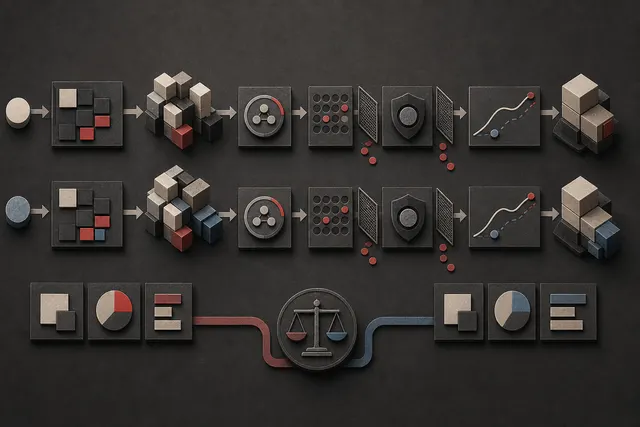
An AI coding tool can produce more text while making software delivery slower. It can shorten implementation while increasing review and rework. It can help one developer explore an unfamiliar API while distracting another developer who already knows the codebase.
That is why lines of code, suggestion acceptance, chat volume, and self-reported hours saved cannot answer the question that matters: did the tool help this team deliver useful, reliable software with less total effort?
The answer requires a controlled pilot that measures the whole path from an assigned task to production behavior.
Decide what “helps” means before the pilot
Start with outcomes, not tool telemetry. A team may want to reduce lead time, clear a maintenance backlog, improve test coverage, help developers learn an unfamiliar system, or make on-call work less disruptive. Those goals require different evidence.
Write a small set of primary outcomes before anyone sees pilot results. A balanced set might include:
- elapsed time from work start to a reviewable change;
- total human work time, including prompting, waiting, reviewing, testing, and rework;
- review time and number of substantive review rounds;
- defects found before merge and after release;
- security findings and unsafe dependency changes;
- change lead time and deployment failure;
- maintainability judged against a predefined rubric;
- developer cognitive load, flow, and satisfaction.
Do not collapse these into one “productivity score.” A tool that improves exploration but increases production defects presents a trade-off that leaders need to see, not an average that hides it.
The SPACE framework is useful here because it treats developer productivity as multiple dimensions: satisfaction and well-being, performance, activity, communication and collaboration, and efficiency and flow. Activity is only one dimension. More commits or generated code is not automatically better performance.
Measure the complete unit of work
Choose a unit that connects engineering activity to a meaningful result. Depending on the team, that might be an issue, change request, incident fix, migration step, or independently deployable feature.
Record when the task becomes ready, when work starts, when review begins, when it is approved, when it reaches production, and whether it causes rework or an incident. Time spent generating code is only one segment.
This matters because AI assistance can move effort between people. The author may finish sooner while a reviewer spends longer understanding a larger or less idiomatic change. A platform team may absorb extra CI usage. Senior maintainers may perform cleanup that is invisible in the original task record.
Measure author and reviewer effort separately, then add them when estimating total cost. Preserve waiting time as another field rather than pretending it is active work.
Use comparison, not memory
“We feel faster than last quarter” is weak evidence. The backlog, staffing, deadlines, codebase, and tool itself may all have changed.
A practical pilot can randomly assign eligible tasks to an AI-allowed or normal-workflow condition. Randomization reduces the risk that developers choose AI only for easy tasks or avoid it for work they expect to be difficult. If random assignment is impossible, use matched tasks and record the remaining sources of bias.
Define eligibility in advance. Exclude emergencies, highly sensitive work that the tool is not allowed to process, and tasks with no credible comparison. Include ordinary maintenance and integration work, not only greenfield demonstrations where generating a plausible first draft is unusually valuable.
Stratify the results by factors that could change the effect:
- developer familiarity with the tool;
- developer familiarity with the repository;
- task type and estimated complexity;
- programming language and test maturity;
- size and age of the codebase;
- whether the work is exploratory or production-critical.
The goal is not to prove that “AI coding works” or “does not work.” It is to identify the conditions under which a specific workflow helps this team.
Treat published studies as boundary conditions
Different studies can report different effects without one of them being fraudulent. Their participants, tasks, tools, and definitions may differ.
METR ran a randomized trial in which 16 experienced open-source developers completed 246 real tasks in mature repositories they knew well. In that specific setting, access to early-2025 AI tools increased completion time by about 19%, even though participants believed the tools had made them faster. The study paper is valuable because it measured real task duration and exposed a gap between perception and observation.
It is not a timeless verdict on every tool. METR later explained that its continuing experiment faced participation bias as more developers became unwilling to work without AI, and that newer tools and greater experience could produce different effects. Its 2026 methodology update is a reminder to timestamp every result and preserve the exact tool configuration.
The 2025 DORA research on AI-assisted software development describes AI as an amplifier of an organization’s existing strengths and weaknesses. That framing suggests a useful hypothesis for a pilot: teams with fast feedback, clear standards, and reliable delivery systems may capture benefits that a fragile process cannot.
Use external research to design the experiment and interpret uncertainty. Do not substitute someone else’s average for your own production evidence.
Capture speed and stability together
AI evaluation should connect to the delivery system rather than end at merge. DORA’s current software-delivery metrics separate throughput from instability:
- change lead time;
- deployment frequency;
- failed-deployment recovery time;
- change failure rate;
- deployment rework rate.
For a tool pilot, change lead time, failure rate, and rework are usually more informative than raw deployment frequency. A team can generate and merge more changes while spending more time fixing them.
Compare distributions, not only averages. A tool may help many routine tasks but create a small number of very expensive failures. Report medians, upper percentiles, and the count and cost of severe incidents.
Do not compare unrelated services against one another. Track the same applications and teams over comparable periods, and annotate major releases, staffing changes, migrations, and outages.
Make review load visible
Code review is where apparent author speed often becomes team cost. Capture:
- time from review request to first substantive response;
- active reviewer minutes when they can be measured without surveillance;
- number of review cycles;
- categories of requested change;
- author rework after review;
- reviewer confidence that the author understands the submitted code.
Label issues using a short, stable taxonomy: correctness, missing tests, security, architecture, readability, dependency choice, documentation, and unnecessary scope. This reveals whether the tool changes the kind of work reviewers perform.
Avoid judging individual developers by these measurements. If people believe the pilot is a performance ranking, they will avoid difficult tasks, split work strategically, or underreport rework. The experiment should evaluate a workflow, not create a leaderboard.
Preserve security and verification gates
AI-generated code should meet the same acceptance criteria as human-written code. The relevant question is not whether the output looks plausible, but whether the released change satisfies the system’s requirements.
Keep normal controls active:
- peer review for risk-appropriate changes;
- automated unit, integration, and regression tests;
- static analysis and secret detection;
- dependency review and provenance checks;
- threat modeling for changed trust boundaries;
- dynamic testing or fuzzing where appropriate;
- production monitoring and vulnerability response.
NIST’s Secure Software Development Framework organizes practices around preparing the organization, protecting software, producing well-secured releases, and responding to remaining vulnerabilities. A coding assistant does not remove any of those responsibilities. The pilot should record whether it changes how often controls fail or how much remediation they create.
Keep sensitive repositories and data within the approved tool configuration. Record model and extension versions, retention settings, enabled context sources, network access, and repository permissions. A productivity gain does not justify an unmeasured confidentiality or supply-chain risk.
Evaluate maintainability after the novelty wears off
Immediate task completion may miss future cost. Sample completed changes after several weeks and ask reviewers who were not the original authors to assess:
- whether the code follows local architecture and conventions;
- whether names and abstractions communicate intent;
- whether tests describe important behavior rather than mirror implementation;
- whether dependencies and generated complexity are justified;
- whether another developer can safely modify the code;
- whether comments and documentation remain accurate.
Use a written rubric and blind reviewers to the experimental condition when practical. Also track defects and rework linked to the change during the follow-up window.
Generated code volume deserves special suspicion. More code expands the review and maintenance surface. Prefer the smallest change that solves the task and passes the same design standards as any other contribution.
Collect experience without confusing it with performance
Developer experience matters even when elapsed time does not improve. A tool may reduce frustration, help someone stay in flow, or make an unfamiliar task more approachable. It may also increase cognitive load through constant verification and context switching.
Use short, repeated surveys rather than one enthusiastic launch survey. Ask about:
- perceived effort and concentration;
- confidence in the submitted change;
- interruption and waiting;
- learning and understanding;
- satisfaction with the workflow;
- tasks where the tool should or should not be used.
Compare these responses with observed outcomes. A mismatch is useful information. It can explain adoption and reveal where people underestimate review or rework costs.
Decide with a prewritten rule
Before the pilot starts, define what would lead to expansion, restriction, redesign, or termination. For example:
- expand only if lead time improves without a material increase in review effort, security findings, failure, or rework;
- restrict the tool to task categories where benefit is consistent;
- redesign training or repository context if output repeatedly violates local conventions;
- stop if data handling, permissions, or provenance cannot meet policy;
- rerun the test after a major model or workflow change.
Report uncertainty and sample size. A short pilot may detect large harms but be unable to prove a modest benefit. “We do not know yet” is a valid result.
A minimal pilot design
For a team that wants a concrete starting point:
- Choose one or two repositories with reliable task and deployment records.
- Define eligible task types and security boundaries.
- Select primary speed, quality, and experience outcomes.
- Capture a baseline using the same definitions.
- Randomly assign or carefully match AI-allowed and normal tasks.
- Preserve tool versions, settings, and developer experience levels.
- Measure author work, review, rework, and production outcomes.
- Review results by task type rather than relying only on an overall average.
- Apply the prewritten decision rule.
- Re-evaluate when the tool, codebase, or workflow materially changes.
The best AI coding tool is not the one that generates the most code or produces the most impressive demonstration. It is the one that improves the team’s chosen outcomes after review, testing, deployment, maintenance, security, and human effort are all counted.