How MLB's Pitch Clock Actually Works, and What It Changed About Baseball
A breakdown of Major League Baseball's 2023 pitch timer rules — the time limits, penalties, and disengagement caps that reshaped the pace of the sport.
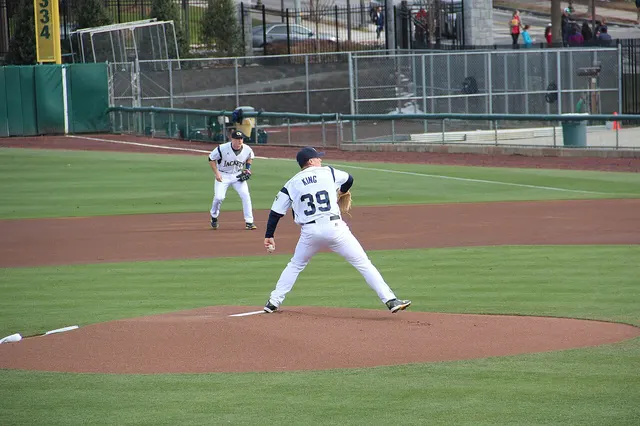

Baseball spent most of its history as the one major American sport with no clock at all, which is exactly why the pitch clock, introduced across Major League Baseball for the 2023 season, counted as one of the most significant rule changes the sport had made in decades. It didn’t change how the game is scored or won — it changed how quickly it gets there.
The basic timer
Under the rule, a pitcher must begin his throwing motion within a fixed number of seconds of receiving the ball back, or of the previous play ending. With the bases empty, that limit is 15 seconds; with any runner on base, it was set at 20 seconds for the 2023 season, later tightened to 18 seconds for 2024, according to MLB’s own glossary explanation. Between batters — that is, once one plate appearance ends and before the next begins — pitchers get 30 seconds.
What happens if either side is late
The rule places obligations on both the pitcher and the batter, and each has its own automatic penalty. A pitcher who fails to begin his motion before the timer expires is charged with an automatic ball, added directly to the count without a pitch being thrown. A batter, meanwhile, must be in the batter’s box and “alert to the pitcher” by the 8-second mark on the clock; a batter who isn’t ready in time is charged with an automatic strike. Both penalties are enforced by the umpire watching the countdown, not by any judgment call about intent — the clock either has time left or it doesn’t.
Limiting pickoff attempts
A separate part of the rule targets a different way pitchers had previously slowed the game down: repeated pickoff throws or step-offs meant to disrupt a base-runner’s timing rather than actually catch him. Pitchers are now limited to two “disengagements” — pickoff attempts or stepping off the rubber — per plate appearance while a runner is on base. A successful pickoff, or any runner advancing, resets the count. If a pitcher attempts a third, unsuccessful disengagement, the runner is awarded the next base automatically, per MLB’s rules glossary. Certain actions are excluded from counting as disengagements, including mound visits and injury timeouts, and teams get one additional mound visit in the ninth inning if they’ve already used their standard allotment of five.
Why the league did this
The pitch clock followed years of internal and public debate about MLB games growing steadily longer, driven partly by pitchers taking longer between pitches and hitters stepping out of the box to adjust gloves, batting gloves and routines between pitches. The league had experimented with pitch timers in its minor leagues for several seasons before bringing the rule to the majors for 2023, treating those lower levels as a testing ground for the exact time limits and penalty structure eventually adopted, as covered in ESPN’s rundown of the 2023 rule changes.
Adjusting to the clock
The rule required real behavioral change from players used to working at their own pace for an entire career. Pitchers had to adapt their pre-pitch routines and catchers’ sign sequences to fit inside the countdown, while hitters had to give up some of the stepping-out habits that had become common. Enforcement in the first season did produce some high-profile violations and automatic penalties in notable moments, which drew attention to how strictly umpires were applying the rule, though the league did not treat those incidents as reasons to relax the time limits.
The takeaway
The pitch clock didn’t change baseball’s fundamental rules of outs, innings or scoring — it added a hard time limit to a sport that previously had none, with automatic, non-discretionary penalties for either side that stalls. Whether a particular play, count or moment looks fast or slow under the new system comes down to simple arithmetic: whether the pitcher threw, or the batter was ready, before the number hit zero.
Baseball was late to the idea, but not the first to try it — see the 24-second shot clock that rescued the NBA and how tennis tiebreaks changed the length of a match.