The 24-Second Shot Clock: How One Man's Napkin Math Rescued the NBA
How Danny Biasone's 1954 shot-clock invention changed professional basketball's scoring and pace, and why the number 24 was not arbitrary.
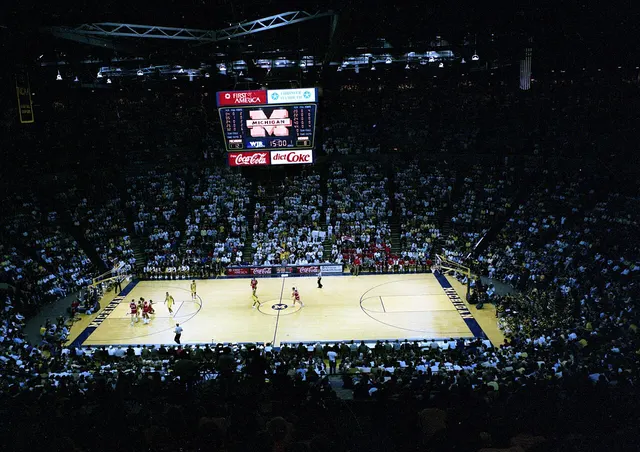

Professional basketball nearly stalled itself to death in its early years, and the fix came not from a coach or commissioner but from the owner of a small-market bowling alley who did some arithmetic on the back of a napkin. That fix — the 24-second shot clock — is now so fundamental to how basketball is played that it is easy to forget the game ever worked differently.
A league in danger of boring its own fans
In the early 1950s, the NBA had no rule forcing a team to attempt a shot within any set time. A team that took an early lead could simply hold the ball, passing it around while the opposing team fouled to try to get it back, in games that dragged and often ended in ugly free-throw contests. Attendance was suffering, and several franchises were struggling financially. Danny Biasone, who owned the Syracuse Nationals, became convinced the sport needed a hard limit on possession length, as detailed in the Naismith Memorial Basketball Hall of Fame’s profile of Biasone.
The number wasn’t a guess
Biasone’s reasoning, according to the Hall of Fame’s account, started from an observation: well-played, entertaining NBA games tended to produce around 120 total shot attempts, roughly 60 per team. He worked backward from that figure. A basketball game runs 48 minutes, or 2,880 seconds. Dividing that by 120 shots gives 24 seconds per shot — the amount of time each team could hold the ball, on average, while still generating that same total volume of shooting. The idea was to force the pace teams were already capable of, rather than invent a new one.
From experiment to permanent rule
The NBA tested the 24-second clock in a scrimmage before adopting it for the 1954–55 season. The effect on the way the sport looked was immediate. According to figures reported by WBUR’s Only A Game, NBA teams had been averaging 79.5 points a game before the clock; in the first season with it, scoring jumped to 93.1 points per game, and field goal attempts rose from roughly 75 to 86 per team. Stalling tactics that had turned some games into slow-motion free-throw exhibitions largely disappeared, because a team could no longer just sit on a lead by refusing to shoot.
Why it mattered beyond the stat sheet
The shot clock didn’t just add points — it changed what basketball rewarded. Teams could no longer win purely by protecting a lead through delay; they had to keep creating and taking shots, which favoured skill, speed and depth over simple stalling. Historians of the game, including those cited in the Hall of Fame’s retrospective, credit the rule with helping save the NBA at a moment when its commercial future was genuinely uncertain — fan interest and revenue both improved once games became faster and higher-scoring.
The clock today, and where it differs
The NBA still uses 24 seconds, but the number is not universal across basketball. FIBA international competition and the NCAA have historically used different lengths — men’s college basketball in the United States used a 35-second clock for years before shortening it, while FIBA settled on 24 seconds as well after considerable experimentation of its own. The core logic Biasone applied — count how much shooting a good game produces, then reverse-engineer a time limit — has effectively been the template every governing body has followed since, even where the exact number differs.
The takeaway
Basketball’s most important rule change wasn’t dreamed up by a rules committee; it came from an independent owner doing simple division on how the game was actually played, then testing it before making it permanent. The lesson generalises well beyond basketball: a rule that forces a sport’s natural, entertaining pace to happen more often is often a bigger structural win than any single tactical innovation.
The same problem — a sport slowing itself to death — was solved differently elsewhere: see MLB’s pitch clock and the tennis tiebreak.