AI Cut Parts of OpenAI's Chip by 10-13%. How Solid Is the Claim?
OpenAI says AI-proposed changes shrank two blocks of its Jalapeño chip by 10-13% and gained up to 14% for AMD. What its Nov. 18 post does and doesn't show.
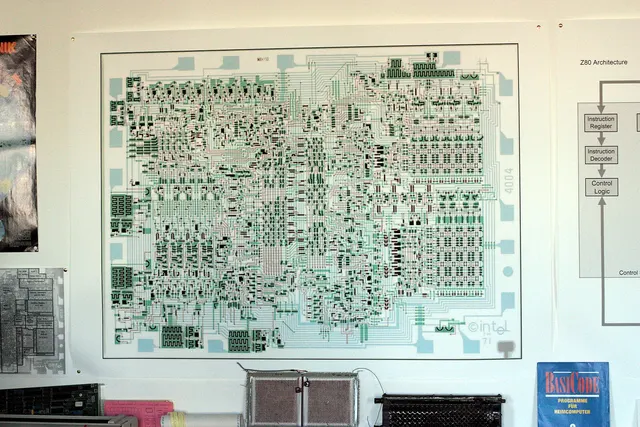

OpenAI says its models are now quickly improving the chips that power AI. In a Nov. 18 research post, the company reports that model-proposed changes cut the standard-cell area of two compute blocks in its first custom inference chip, Jalapeño, by about 13% and 10%. It also reports gains of up to 14% on AMD’s flagship GPU design. These are big numbers. This article separates what OpenAI measured from what it estimated, and what it left out.
Everything below comes from OpenAI’s post and a Synopsys press release from Sept. 30. Both are statements by the companies involved. We found no independent test of the results.
What OpenAI announced
The post has three parts, plus a partnership:
- Jalapeño. OpenAI began using GPT-o3 mini to help design the chip in early 2025. In August it shared how its engineers used frontier models to speed up the work. The new post looks at the actual design changes.
- AMD. A collaboration to improve AMD’s GPU and CPU designs.
- RISC-V tests. A benchmark that scores successive models on two open-source processor cores.
- Synopsys. A partnership to train GPT-Synopsys, a model meant to use chip-design software the way expert engineers do.
What “PPA” and “RTL” mean here
PPA stands for power, performance and area, the three trade-offs every chip design balances. A change that helps one of the three can cost another, so gains are only meaningful when all three are checked.
RTL is the code that describes a chip’s circuits. OpenAI says its model found improvements for AMD by rewriting that code, written in the SystemVerilog language. It says the model used Synopsys tools to check that each rewrite preserved the block’s behavior and to weigh the power, performance and area trade-offs.
The Jalapeño numbers
OpenAI gives two concrete examples from the matrix unit, the arithmetic part of the chip. One multiplier redesign used about 15% less cell area in synthesis and cut latency from two clock cycles to one. A separate adder redesign used about 15% less cell area and kept its two-cycle latency.
Across the wider effort, the team estimates that model-proposed changes cut standard-cell area by about 13% in the vector unit and 10% in the matrix unit. OpenAI says these changes were silicon proven during Jalapeño’s bring-up, meaning they were tested on real silicon.
Two limits matter. The 13% and 10% figures are team estimates, not independent measurements. And they describe two blocks, not the whole chip. The post does not say how much of the chip those blocks make up, so the savings for the full chip cannot be read from it.
The AMD claim
OpenAI reports up to 14% PPA improvement on AMD’s flagship GPU IP, compared with heavily optimized baselines. It calls this “roughly a year of progress achieved in less than 5 months.” Our own calculation, not OpenAI’s: if a year of progress took under five months, the pace is more than 2.4 times faster than usual.
OpenAI also says AMD has included some of the changes in a recent design it sent for manufacturing, and added others to its production design files. AMD separately verified single-digit percentage gains across key blocks of its next-generation flagship CPU, according to the post.
What the post leaves out is AMD’s raw numbers. It does not give block-level details or the underlying PPA figures behind the “up to 14%.” The post does not link to an AMD announcement either.
The RISC-V test: a score, not a speed
To track progress from one model generation to the next, OpenAI tested models on two open-source 32-bit cores: PicoRV32, built for reprogrammable FPGA chips, and Ibex, the embedded processor in the OpenTitan security chip. Both are small, microcontroller-class designs.
In the first task, each model got the original hardware description and had to raise throughput, the number of instructions a core can execute per second. Designs scored zero if they failed a simulation check or used more than 16 times the original core’s area. The best throughput observed for each core was set as 1.0, so every score is relative to the best run in the test, not an absolute speed.
With about 112,000 tokens per run, GPT-6.2 Astra had the highest average score on both cores. On PicoRV32, its score was about twice that of GPT-6 Astra. The full evaluation covered 9,881 scored runs. The averages include runs that scored zero.
In the second task, models designed a core from written requirements. All five models scored higher there than when improving an existing design. GPT-6.2 Astra averaged about 0.7 on PicoRV32 and about 0.75 on Ibex. OpenAI itself cautions that starting from a spec lets a model leave out features of the original cores, such as performance counters and extra instructions, which may explain part of the gap.
The Synopsys side
Synopsys, which makes electronic design automation (EDA) software, said on Sept. 30 that it signed a multi-year agreement with OpenAI. OpenAI will license Synopsys’ EDA tools to develop GPT-Synopsys. The model will run on OpenAI-hosted infrastructure and integrate with the Synopsys.ai platform. Synopsys says customer data is not used to train the model and is encrypted at rest and in transit.
The release reports no performance results, deal value or revenue split, and it gives no launch date. It describes faster design and better PPA as expected benefits, not measured outcomes, and says early engagements with leading chip customers are underway.
What to take from it
First, the claims are real but self-reported. Jalapeño’s figures are estimates, and the RISC-V test is OpenAI’s own, using a scoring method it designed. Second, OpenAI states the test limits itself: the cores are small, the clock speed was estimated with the Yosys tool rather than measured after physical synthesis, and a tighter area limit would make the test more realistic. Third, the AMD result is the most commercially significant, because it touches a shipping-class design, and it is the least documented.
The open question is whether results like these hold up on large production chips under outside scrutiny. For the other side of AI hardware, the memory that feeds these chips, see our explainer on HBM and the memory wall.