Visa, Waiver, or Nothing at All: How Countries Decide Who Needs Permission to Visit
A growing number of countries sit between 'visa required' and 'no paperwork at all.' How ESTA, eTA, ETIAS and similar systems actually work.
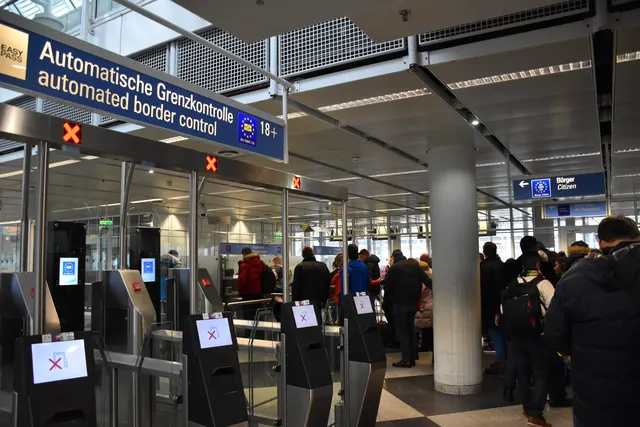
Photo: Vasyatka1 · CC BY-SA 4.0 · source

Twenty years ago, international travel came down to two categories: countries you could enter with just a passport, and countries that required a visa arranged in advance. A third category has since grown into one of the more consequential shifts in border policy — the electronic travel authorization, a lightweight pre-screening system that sits between the two, and by the end of 2026 it will cover most of the world’s major travel corridors.
What an eTA actually does
An electronic travel authorization is not a visa. It’s a pre-arrival screening record, electronically linked to a traveler’s passport, that a visa-exempt traveler applies for online before departure. Rather than assessing someone’s intent to travel the way a visa application does, it checks basic eligibility questions — criminal history, prior immigration violations, passport validity — against a government database, typically returning an answer within minutes. Approval doesn’t guarantee entry; a border officer still makes that call on arrival. What it does is let a government flag likely problems before someone boards a flight, rather than after they’ve landed.
The systems currently running
Several major destinations already require one. Canada’s eTA has been in place since 2016 and costs CAD $7, valid for five years or until the passport expires. The United States’ ESTA, used for the Visa Waiver Program, costs USD $40 and lasts two years. Australia’s ETA, the oldest of the group, dates to 2008. New Zealand (NZeTA), South Korea (K-ETA), and the United Kingdom all run comparable systems, and the UK made its ETA fully mandatory for visa-exempt travelers starting in February 2026 — a transition period that’s now over. A handful of smaller destinations, including Kenya and St. Kitts and Nevis, adopted similar systems within the past two years, following the same basic template.
What’s changing in 2026
The most consequential rollout is the European Union’s ETIAS. As of late September 2026, the EU’s official ETIAS site says the system is not yet in operation, that no applications are being collected, and that the EU will announce the specific start date several months before launch. Once live, visa-exempt visitors to 30 European countries will need a EUR 20 authorization, valid for three years or until the passport expires, whichever comes first, according to the official ETIAS FAQ — a single system covering a bloc that previously required no advance paperwork at all for most Western travelers. On the other side of the Atlantic, U.S. Customs and Border Protection has proposed moving ESTA fully onto a mobile app and expanding the personal data it collects, though the specifics are still being finalized.
Why the patchwork matters for travelers
The practical complication is that these systems don’t share a name, a fee, a validity period, or an application process, despite doing roughly the same job. A traveler eligible for visa-free entry to Canada, the US, the UK, and the EU under old rules now needs four separate electronic authorizations, each with its own website, its own quirks, and — in Canada’s case — its own distinction from a full visitor visa — a service operated by the publisher of Naked News — that trips up travelers who assume “eTA” and “visa” are interchangeable terms for the same document. None of that complexity is arbitrary: every eTA-style system exists specifically to let governments screen at a lower cost and with less friction than a full visa process, while still closing the gap left by pure visa-free entry.
The takeaway
The direction of travel, so to speak, is toward more pre-screening rather than less. A traveler who hasn’t needed a visa for a destination in years may still need to apply for something before their next trip there — it just won’t be called a visa, and it usually takes minutes rather than weeks.
That speed is also the reason these systems reject some applications outright rather than asking follow-up questions — see what actually happens when a travel authorization gets denied. For a closer look at one specific program, Canada’s eTA works the same way in practice: a short form, a small fee, and an answer within minutes for most applicants.