Why Full-Body 'Supersuits' Were Banned From Competitive Swimming
The rise and 2010 ban of polyurethane racing suits, the record-breaking years that triggered it, and the textile-only rules swimmers still race under.
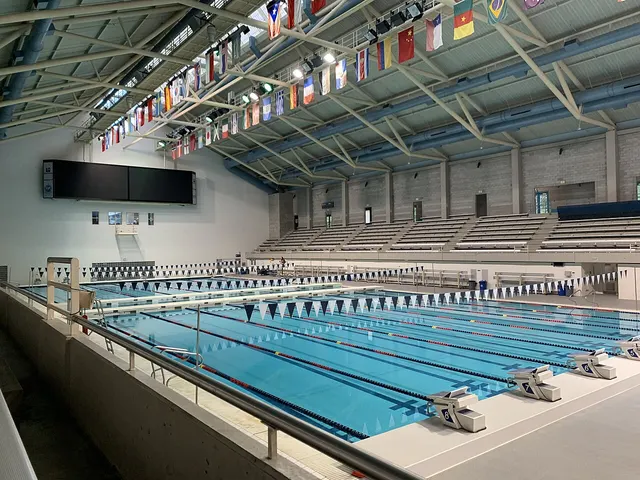
Photo: Tanis Coralee Leonhardi · CC BY-SA 4.0 · source

For roughly two years, competitive swimming’s record books were rewritten so fast that some swimmers were setting world records without even winning their race. The cause was not superior training but a suit, and the sport’s governing body eventually decided the technology had gone too far — banning it outright in 2010.
From skin-tight fabric to engineered hardware
Not long after the 2004 Athens Olympics, Speedo worked with NASA to design a new kind of racing suit using wind-tunnel and water-flume testing. The result, the LZR Racer, used bonded (rather than sewn) seams and compressive polyurethane panels intended to reduce drag and help swimmers hold a more efficient body position in the water. NASA’s own materials described the suit as cutting skin friction drag by roughly 24% compared with the company’s previous racing fabric, according to reporting summarised by CBS News.
Other manufacturers quickly followed with their own polyurethane and neoprene-panelled suits, some covering the body from ankle to neck, aiming for similar drag-reduction and buoyancy effects.
The record avalanche
The effect on competition results was dramatic and immediate. At the 2008 Beijing Olympics, 25 world records fell in swimming — and 23 of them were set by swimmers wearing the LZR Racer, according to figures cited by CBS News. The following year, at the 2009 World Championships in Rome, records continued to fall at a pace many in the sport considered unsustainable and, to some, embarrassing — swimmers and coaches increasingly argued that the suits themselves, rather than athletic improvement, were driving results, and that swimmers without access to the newest suit technology were at a real competitive disadvantage.
The ban
The sport’s international governing body at the time, FINA (now known as World Aquatics), announced it would ban polyurethane suits, with the new rules taking effect in 2010, as reported by ABC News at the time. The replacement rules required competitors to wear textile-only suits, with specific coverage limits: men’s suits could not extend above the navel or below the knee, and women’s suits could not cover the neck or shoulders, or extend below the knee. The goal was to strip out rigid, engineered buoyancy and compression aids and return the sport to fabric that behaves more like ordinary athletic clothing.
FINA’s stated concerns, reflected in contemporary coverage, included that the suits were giving a disproportionate advantage to larger swimmers who could exploit the added buoyancy, and that the sport risked being decided by equipment access rather than athletic performance.
The aftermath in the record books
Because so many world records were set during the 2008–2009 “supersuit era,” the ban created a strange effect: several records set in those two years remained unbroken for a decade or more afterward, since athletes racing in ordinary textile suits were, in some events, no longer able to match times achieved with the banned technology. Swimming historians and outlets covering the anniversary of the ban have noted that this measurably slowed the sport’s normal record progression for years, a pattern documented in retrospectives such as SwimSwam’s look at what might have happened had the suits not been banned.
Where the rules stand now
Textile-only suits, with the coverage limits set in 2010, remain the standard at the Olympics and other events sanctioned by World Aquatics. The episode has also become a reference point whenever new swimwear technology is proposed, with governing bodies now more cautious about approving equipment that could meaningfully alter performance independent of the athlete.
The takeaway
The 2010 ban wasn’t a minor tweak — it was the sport publicly admitting that equipment, not just training or talent, had started to decide races, and choosing to reset rather than let the arms race continue. It’s a useful reminder, for any sport, that rules about what athletes are allowed to wear or use are rarely just bureaucratic detail.
Swimming is not alone in drawing a hard line for the sake of fair competition — compare the false start rule in track and field, where the margin is a tenth of a second.